CIS Series
With better than 1 ppm detection limit, direct sampling at mTorr pressure, and a user-friendly Windows software package, the CIS systems will satisfy your most demanding applications.
Compact Design
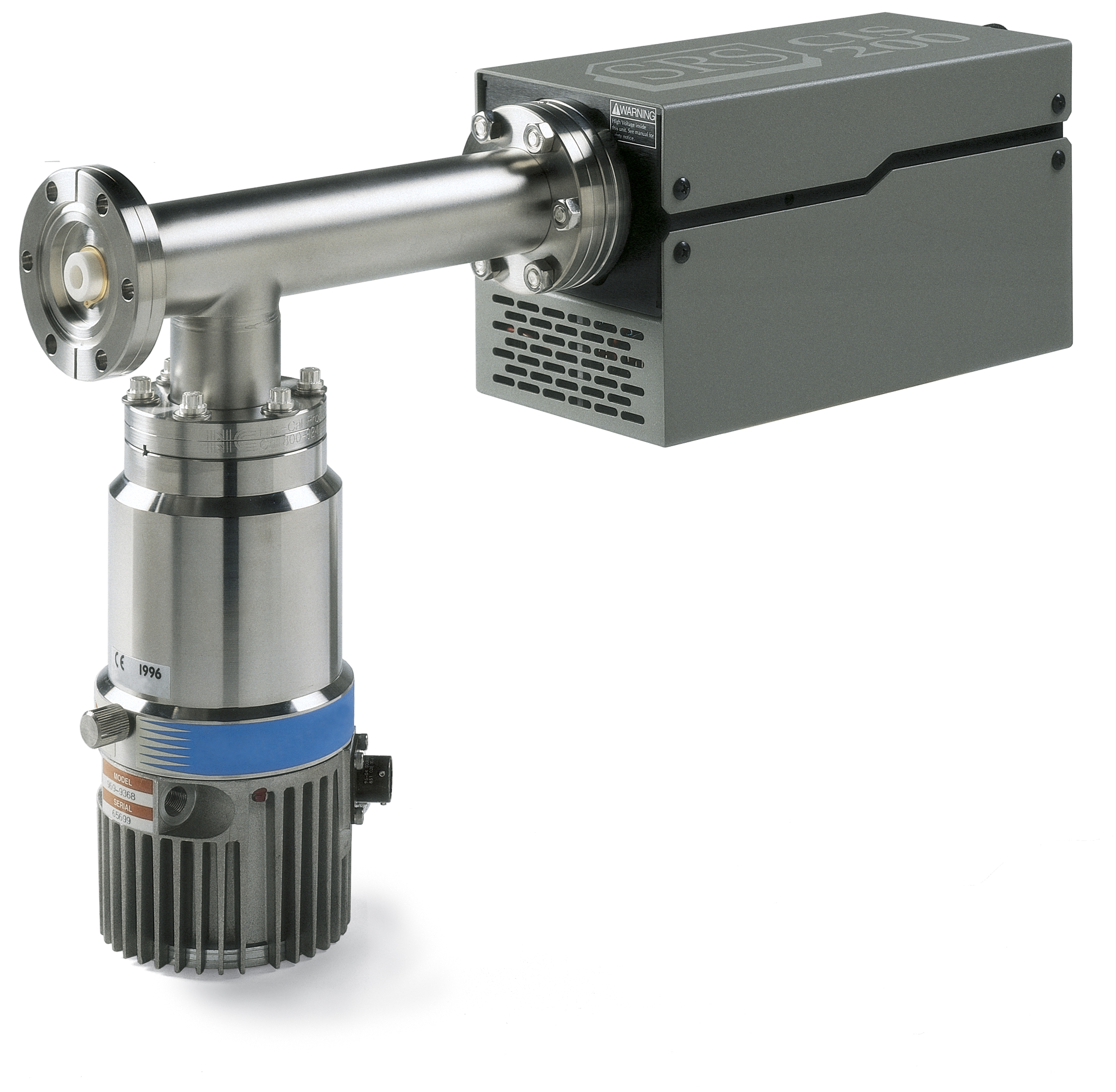
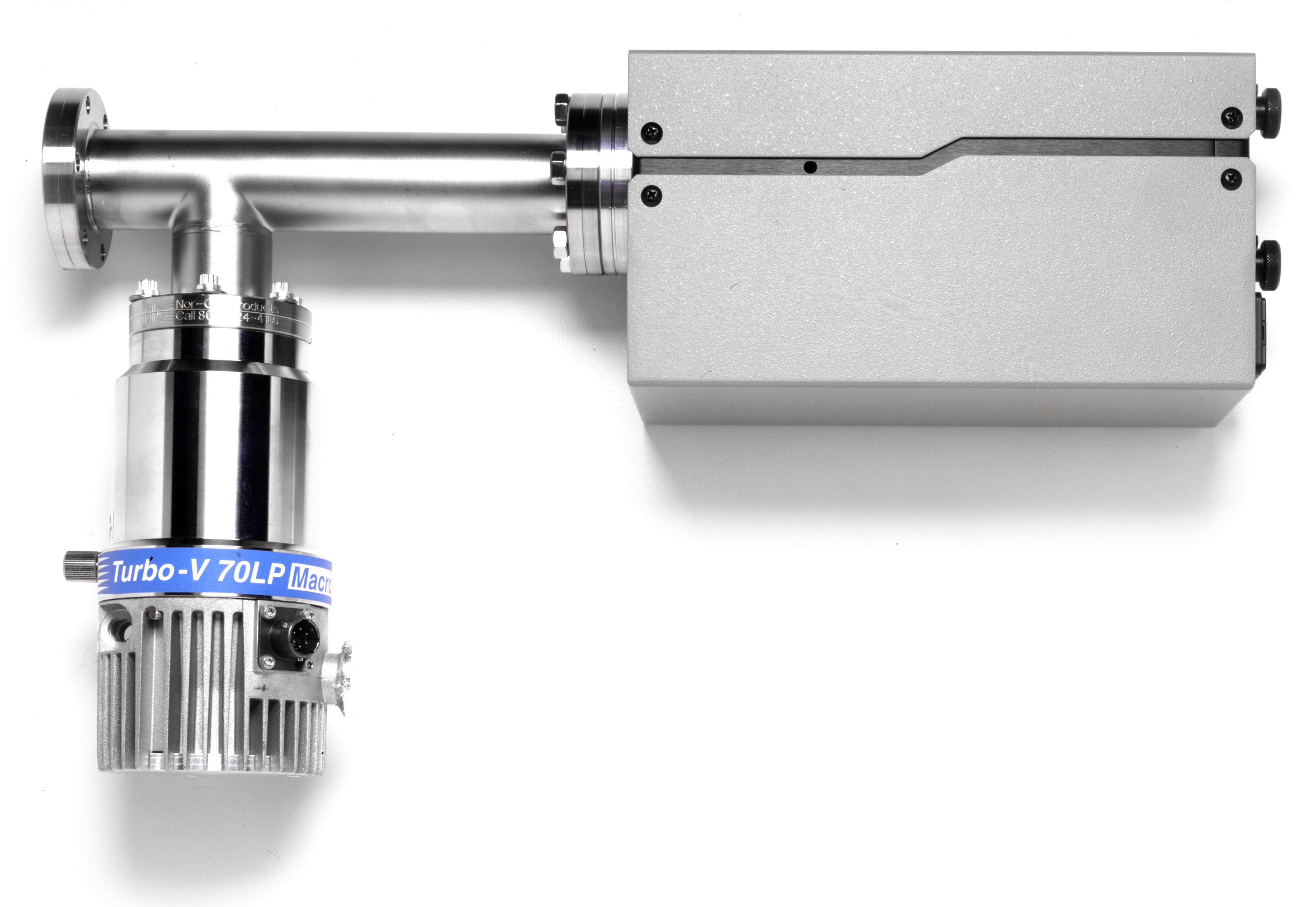
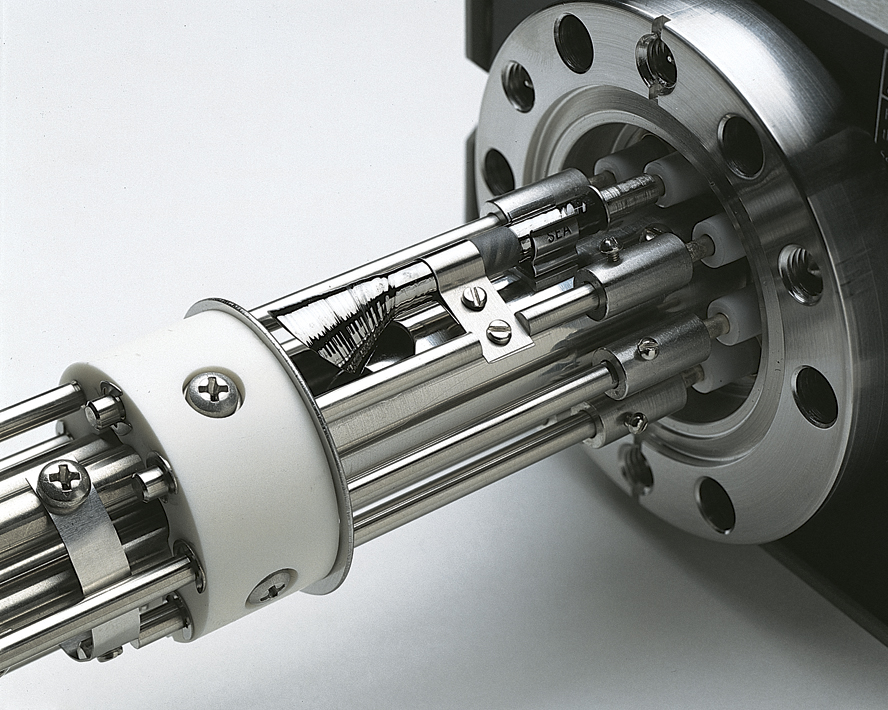
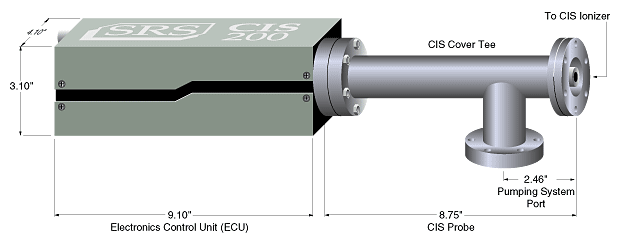
The probe consists of a quadrupole mass spectrometer with a CIS ionizer mounted inside a 2.75" Conflat® Tee. The control unit mounts directly on the probe’s feedthrough flange and contains all the necessary electronics for operating the instrument. The side port of the CIS nipple provides a connection for the differential pumping system that keeps the quadrupole, filament and detector at high vacuum. The system can be connected directly to a process chamber through its standard CIS mounting flange (2.75" CF). The unit is self-aligning, with a simple, robust design. You can clean and reassemble the probe, and replace the filament and electron multiplier in the field, without ever calling the factory.
Gold Plated Ionizer
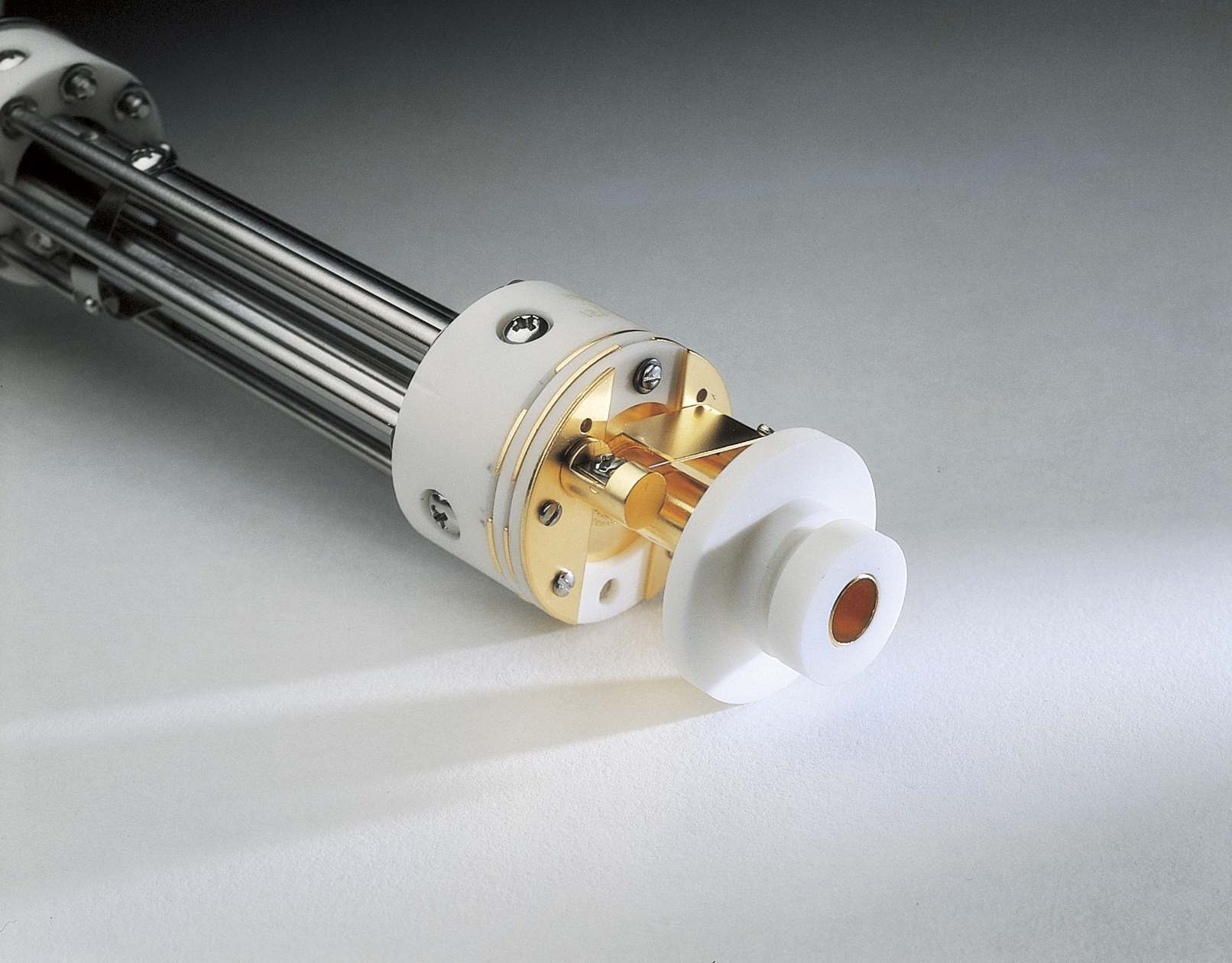
The entire ionizer is made of gold-plated stainless steel. This reduces outgassing and background signals in the ionization region, improves the long-term stability and permits operation while exposed to reactive and corrosive gases. A Tungsten filament is used, which resists corrosive and reactive gases like WF6 and silane, and leads to extended lifetime. The closed (gas tight) design of the ionizer prevents commonly interfering species from backstreaming into the ionization volume. This produces peaks free of spectral overlap.
A Choice of Detectors
The CIS series analyzers come standard with both a Faraday cup detector (10 ppm detection) and a continuous dynode electron multiplier (1 ppm detection). The software allows you to easily switch between detectors.
Versatility
The CIS systems can also be used in a so-called "RGA mode". In this mode, the unit has a lower minimum detectable partial pressure, but a lower maximum operating pressure as well. The RGA mode isused, for example, in the first stage of a sputtering process when the chamber is evacuated to a low pressure, and the quality of the vacuum is checked for leaks and harmful contaminants. The unit can then be switched to a CIS mode for sampling directly at higher pressure.
Complete Programmability
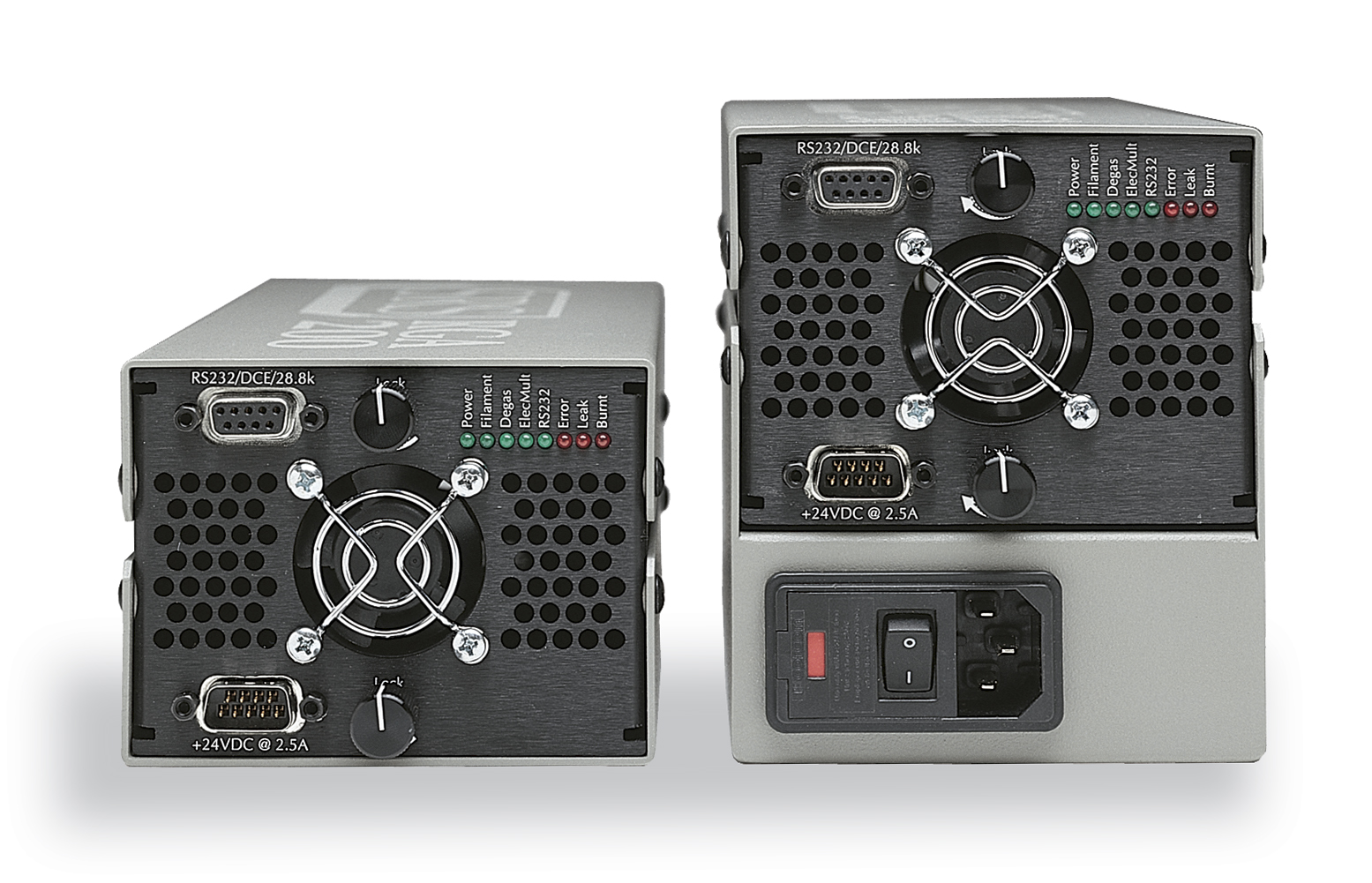
A standard RS-232 interface is provided along with a complete programming reference. All probe parameters can be controlled and monitored, and data can be acquired for use in custom applications.
Windows Software
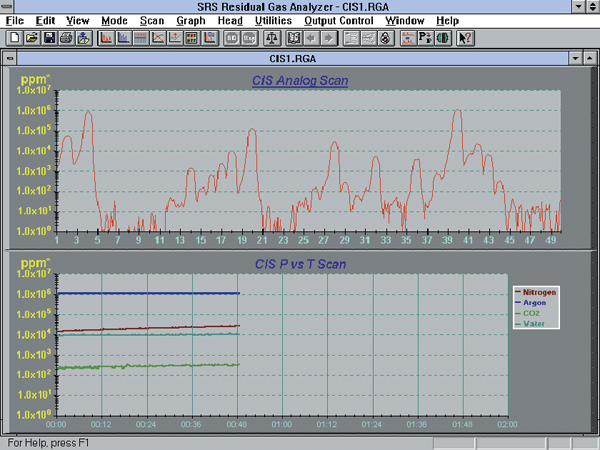
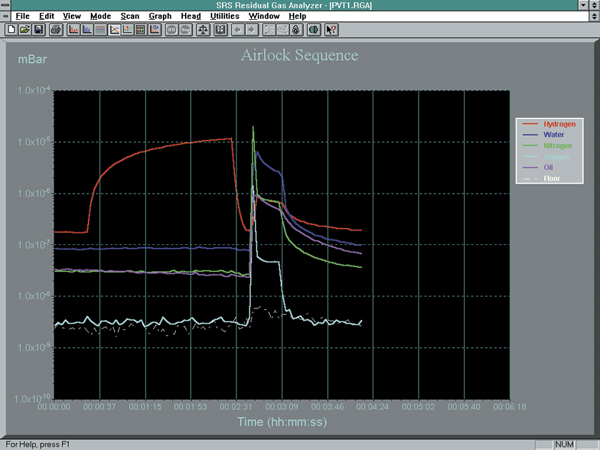
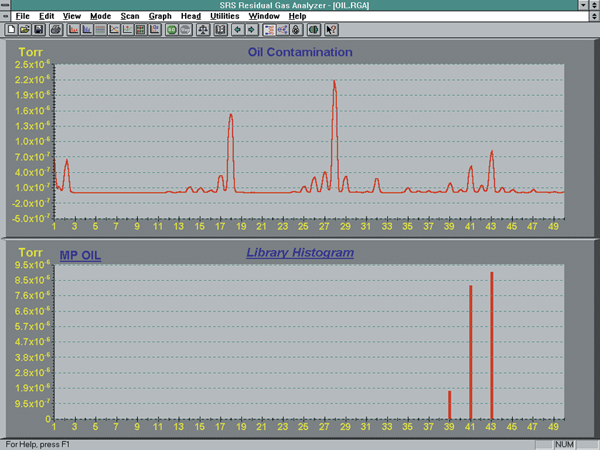
The CIS systems are supported with a real-time Windows software package that runs on PCs. The intuitive graphical user interface allows measurements to be made quickly and easily. The program is fully interactive, giving the user complete control of the graphical display. Screens can be split for dual-mode operation, scales can be set to linear or log format, and data can be scaled manually or automatically. Data is captured and displayed in real-time or scheduled for acquisition at a given interval for long-term data logging. Features include user-selectable units (ppm, Torr, mbar, Pa and A), programmable audio and visual alarms, and comprehensive, on-line help. The software allows complete CIS head control with easy mass scale tuning, sensitivity calibration, ionizer setup, and electron multiplier gain adjustment. For further analysis, data files can be saved in ASCII format for easy transfer into spreadsheets. Graphic images can be saved as META files or copied to the clipboard for importing into other Windows programs. The software also provides password protection for locking out head parameters so that casual users can’t alter important settings.
An optional stand-alone monitor (PPM100) can be used to control the RGA without a host computer.
Multi-Head Operation
The software supports multiple head operation when more than one CIS is needed. Up to eight ECUs can be monitored from the software.
Pumping Requirements
The CIS instruments require connection to a pumping system with an effective pumping speed of at least 40 L/s and a base pressure of less than
Affordable Performance
The SRS CIS systems offer state-of-the-art performance for a fraction of the cost of competing models. Standard systems include Faraday cup detector, electron multiplier detector and Windows software. Options include built-in power module for AC line operation, and a pumping package that includes a turbomolecular pump and diaphragm pump.