RGA100 Series
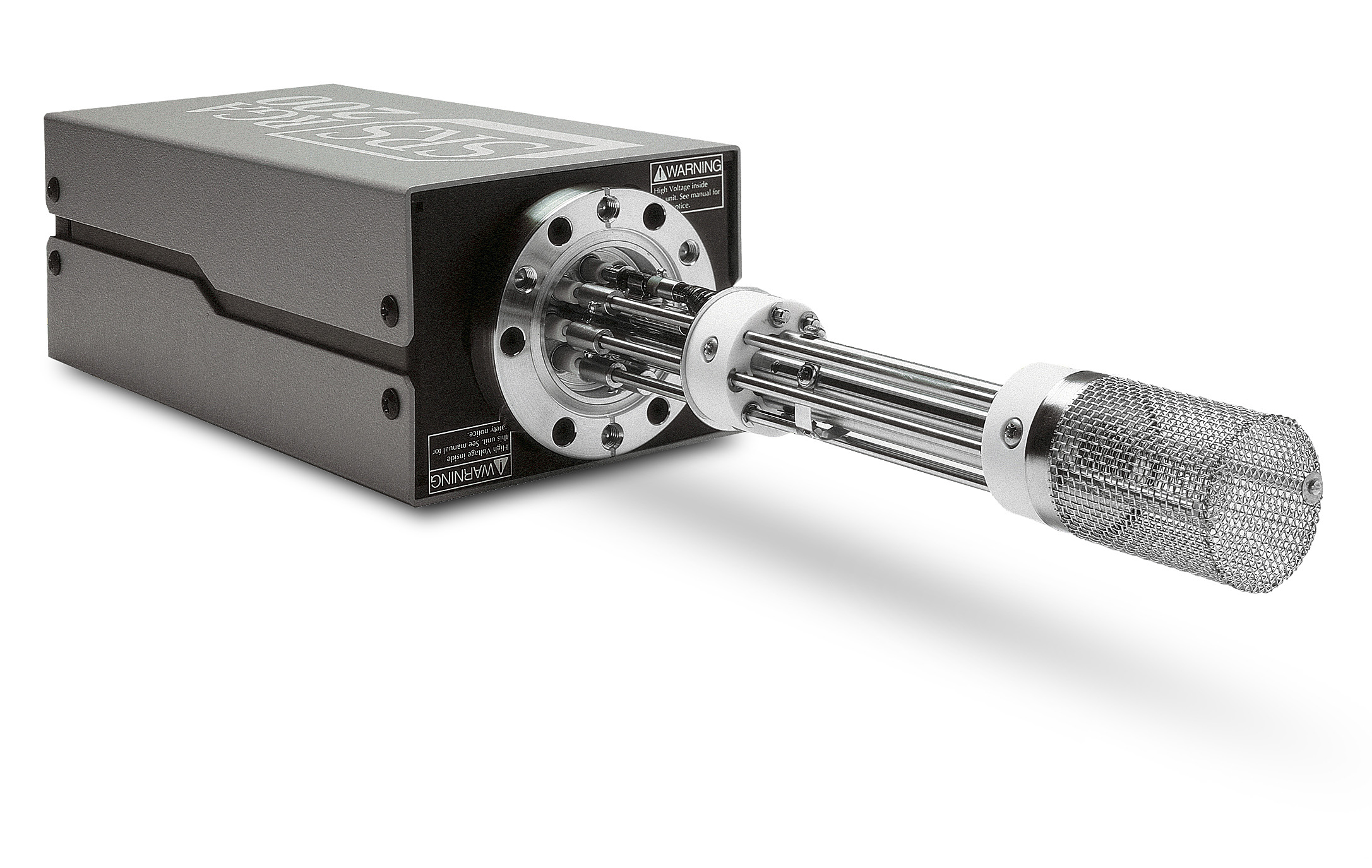
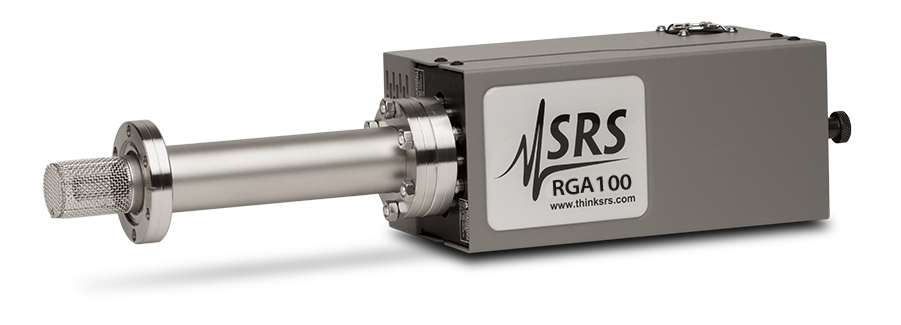
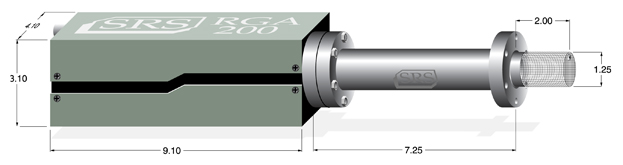
The 100, 200 and 300 amu residual gas analyzers from SRS offer exceptional performance and value. These RGA's provide detailed gas analysis of vacuum systems at about half the price of competitive models. Each RGA system comes complete with a quadrupole probe, electronics control unit (ECU), and a real-time Windows software package that is used for data acquisition and analysis, as well as probe control.
Rugged Probe Design
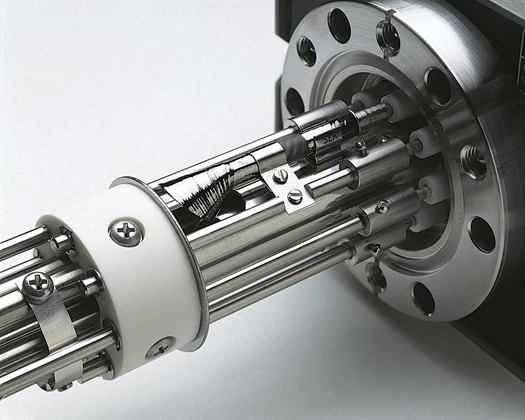
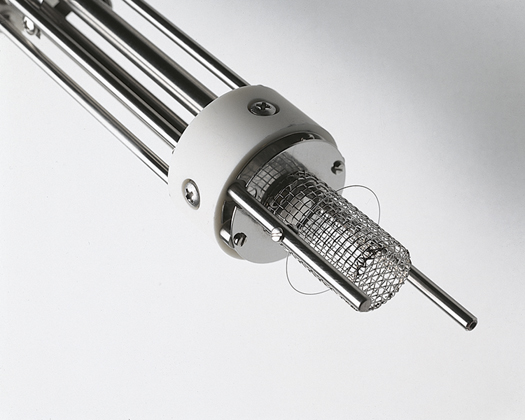
The probe consists of an ionizer, quadrupole mass filter and a detector. The simple design has a small number of parts which minimizes outgassing and reduces the chances of introducing impurities into your vacuum system. The probe assembly is rugged and mounts onto a standard
Compact Electronics Control Unit
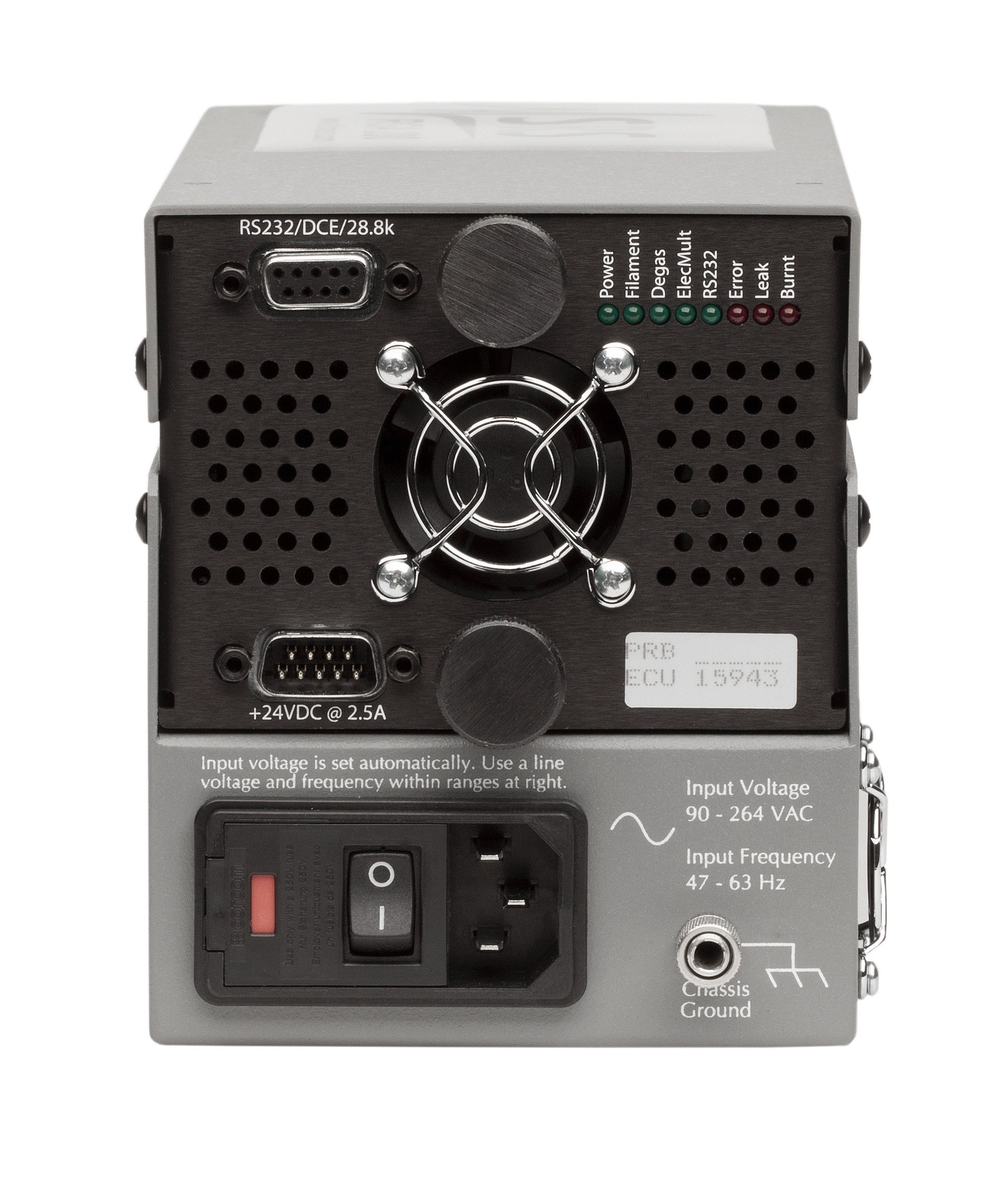
The densely packed ECU contains all the necessary electronics for controlling the RGA head. It is powered by either an external +24 VDC (2.5 A) power supply or an optional, built-in power module which plugs into an AC outlet. LED indicators provide instant feedback on the status of the electron multiplier, filament, electronics system and the probe. The ECU can easily be removed from the probe for high temperature bakeouts.
Unique Filament Design
A long-life, dual thoriated-iridium (ThO2/Ir) filament is used for electron emission.
Electron Multiplier
A Faraday cup detector is standard with SRS RGA systems which allows partial pressure measurements from
Heater Jacket
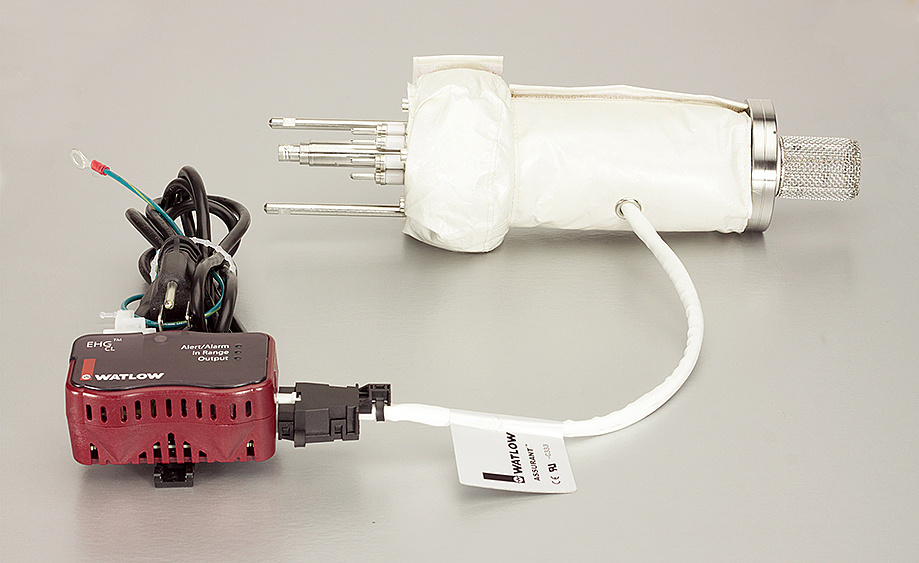
The O100HJRW Heater Jacket comes with a Watlow EHG SL10 Process Controller that provides a preprogrammed temperature of 210 °C (±3 °C). The Heater Jacket is made using PTFE (Teflon) construction, suitable for clean room applications due to its low out-gassing and particle free operation. The O100HJRW is offered in 120 VAC and 220 VAC versions, and is shipped with a country of destination power cord.
Useful Features
All RGAs have a built-in degassing feature. Using electron impact desorption, the ion source is thoroughly cleaned, greatly reducing the ionizer's contribution to background noise.
A firmware driven filament protection feature constantly monitors (675 Hz) for over pressure. If over pressure is detected, the filament is immediately shut off, preserving its life.
A unique temperature-compensated, logarithmic electrometer detects ion current from
Complete Programmability
Communication with computers is made via the
RGA Windows Software
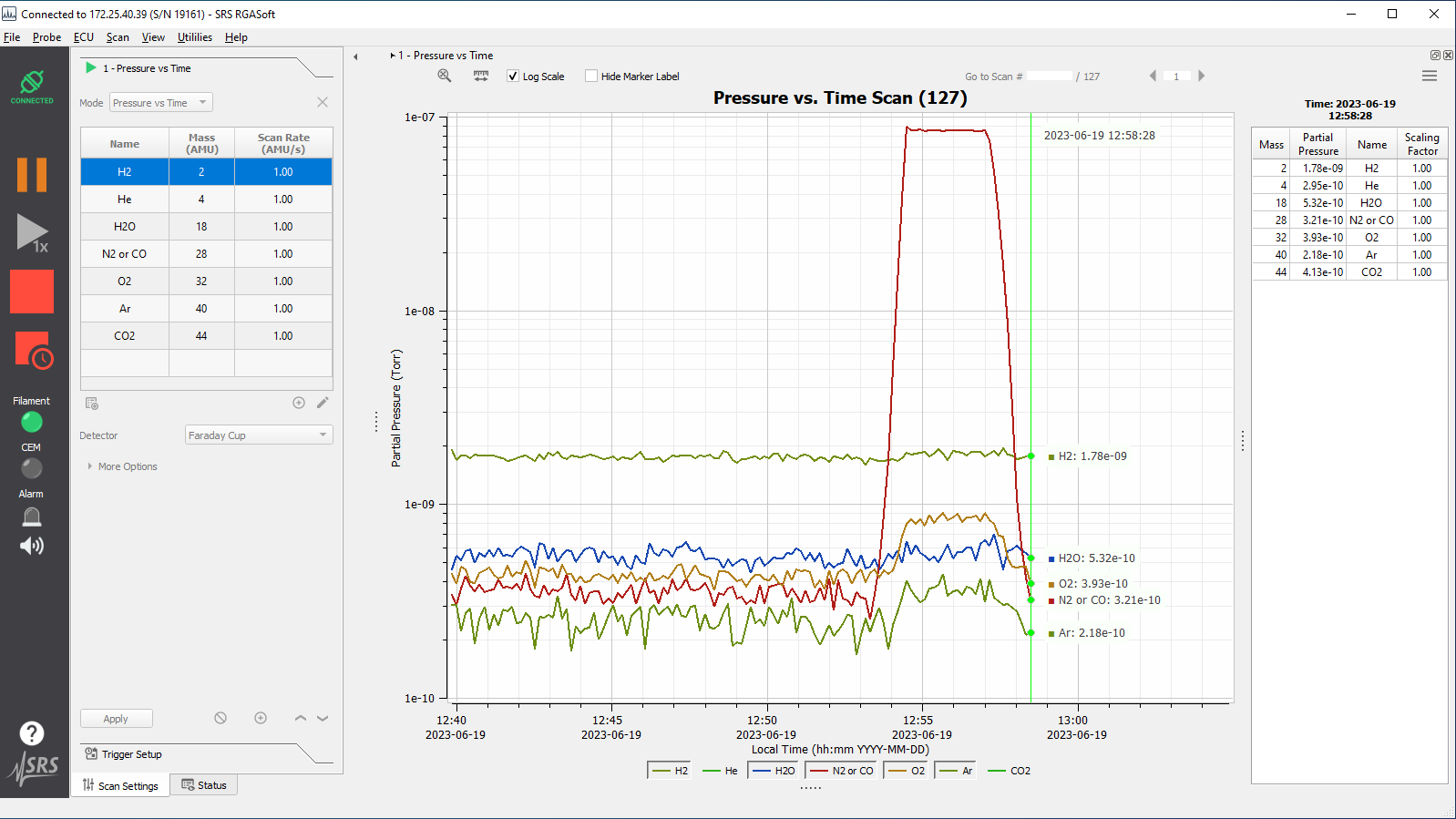
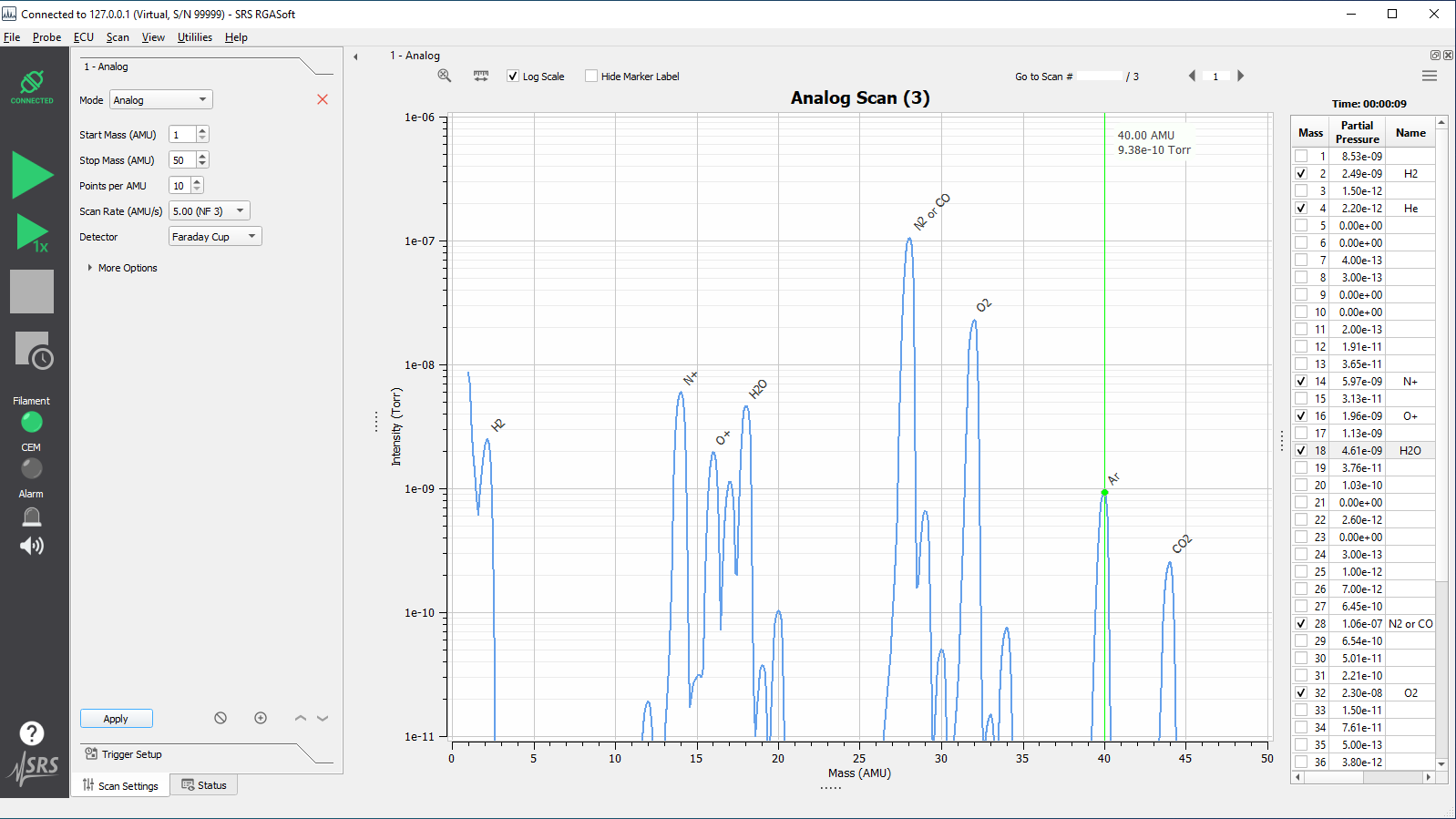
The RGA systems are supported with a real-time software package that runs on Windows OS computers. The intuitive graphical user interface allows measurements to be made quickly and easily. Data is captured and displayed in real-time or scheduled for acquisition at a given time interval for long-term data logging. Multiple spectral data and individual measurements can be collected together in one sequence. Versatile docking windows and widgets give the user various ways to organize the display. Data can be scaled manually or automatically, in linear or log format on plots. Units are selectable among Torr, Bar, Pascal and Amp. Features include common gas labels, programmable audio and visual alarms, expandable library, composition analysis, and comprehensive on-line help.
The software also allows complete RGA control with easy mass scale tuning, sensitivity calibration, ionizer setup, and electron multiplier gain adjustment. For further analysis, data files can be saved in CSV text format for easy transfer into spreadsheets. Graphic images can be saved in common formats (PNG, BMP, TIFF, JPG, SVG, PDF) or copied to the clipboard for importing directly into other programs.
An optional stand-alone monitor (PPM100 RGA Monitor & Controller) can be used to control the RGA without a host computer.
Multi-Head Operation
The software supports multiple head operation when more than one RGA is needed. With a software instance independently control an RGA, multiple RGAs can be controlled and run concurrently with multiple software instances. The number of RGAs is only limited by the system resources.
Performance and Value
The SRS family of RGAs is ideal for applications involving gas analysis, leak detection, and vacuum processing. We offer 100, 200 and 300 amu systems with supporting Windows software and options that include an electron multiplier and a built-in power module for AC line operation.