SR570
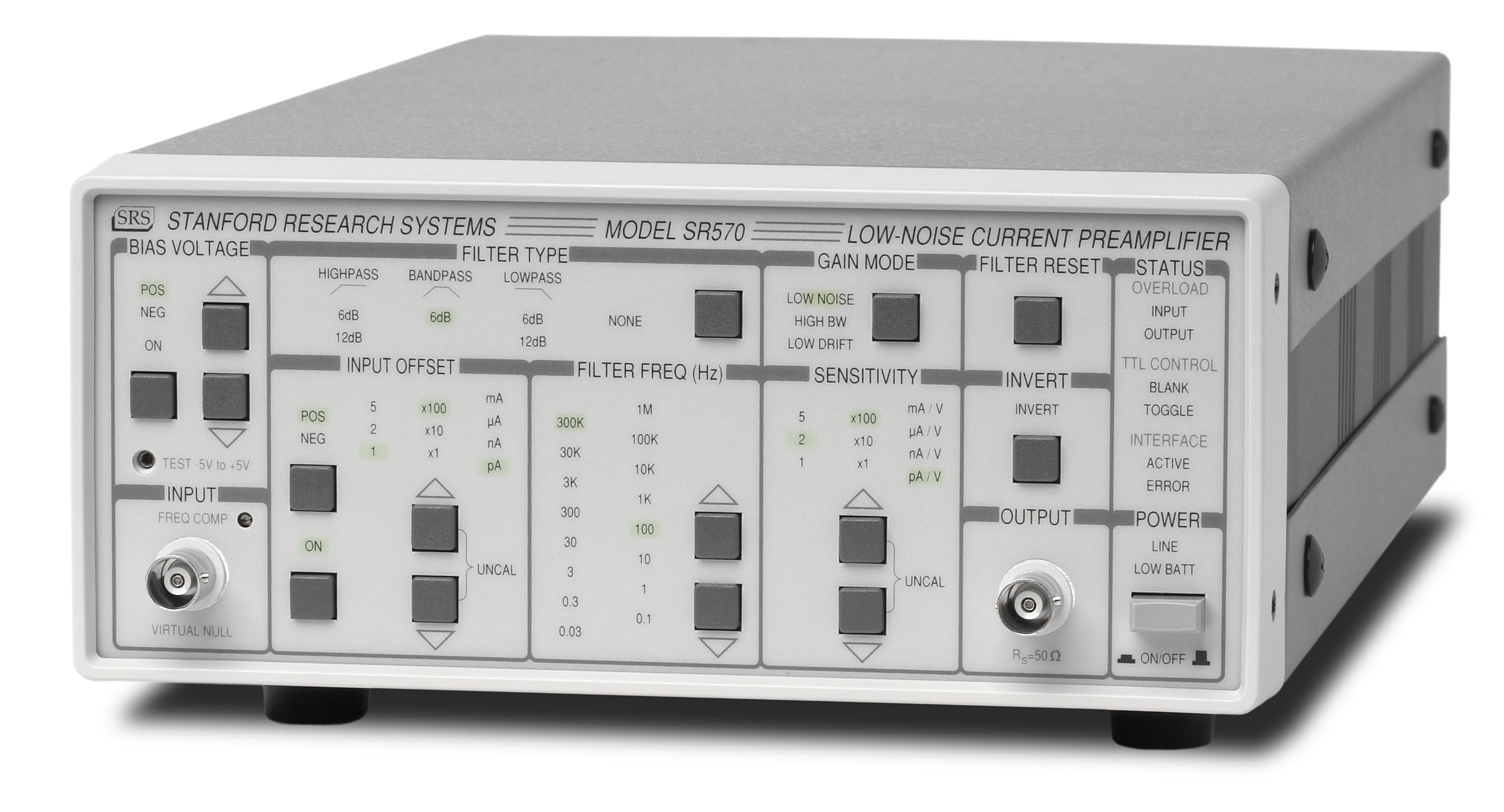
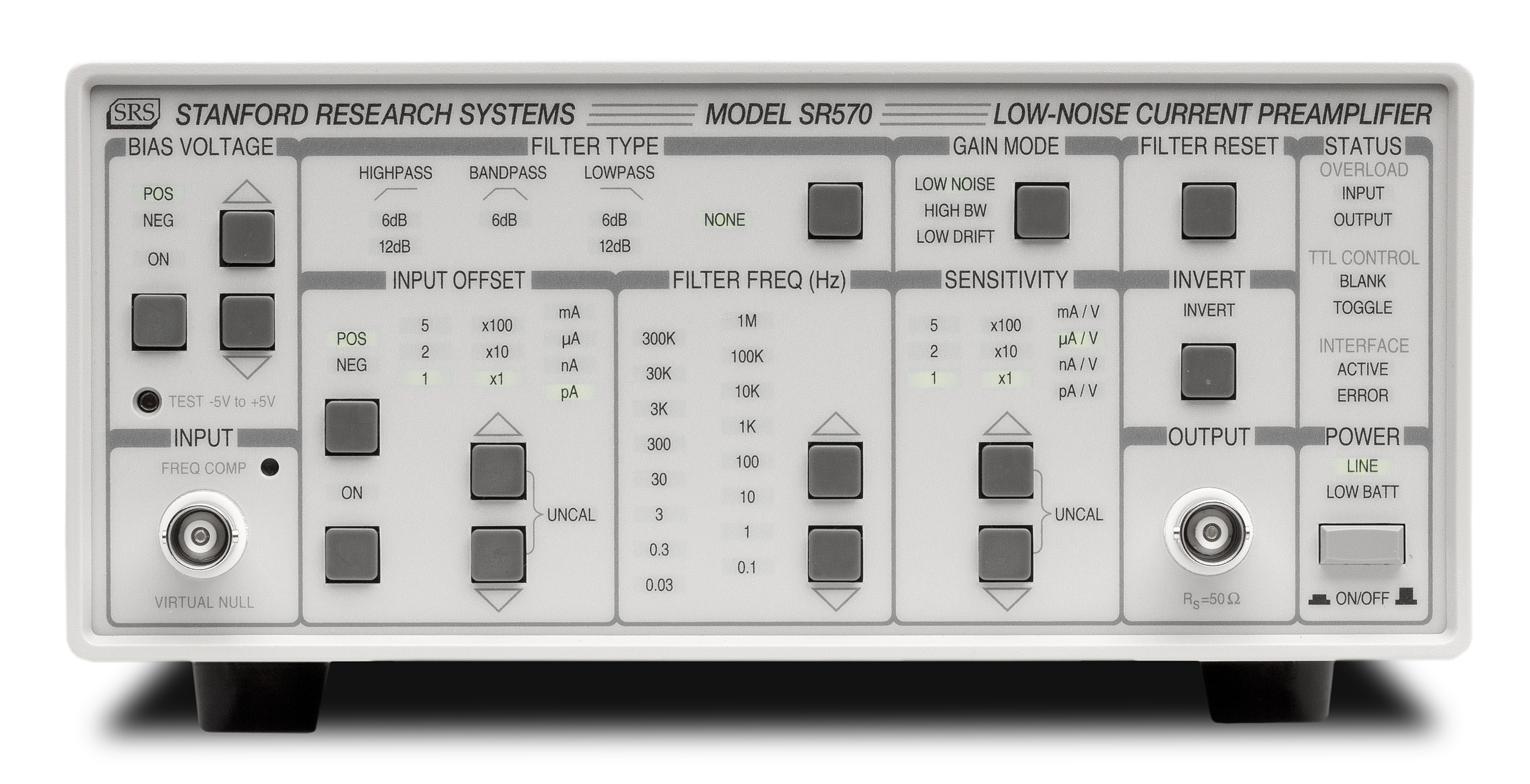
The SR570 is a low-noise current preamplifier capable of current gains as large as 1 pA/V. High gain and bandwidth, low noise, and many convenient features make the SR570 ideal for a variety of photonic, low temperature and other measurements.
Gain
The SR570 has sensitivity settings from 1 pA/V to 1 mA/V that can be selected in a
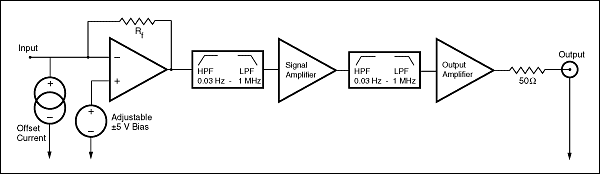
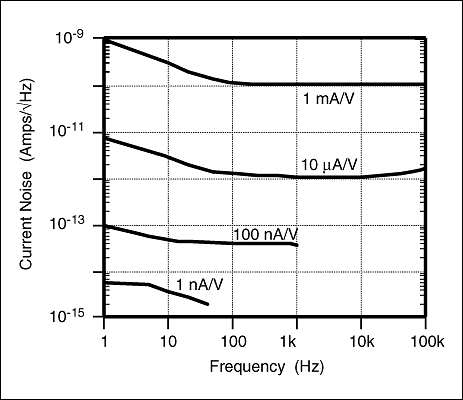
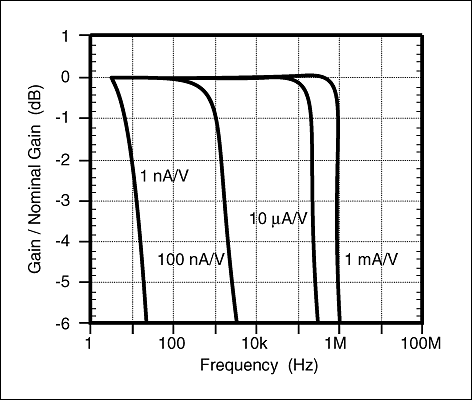
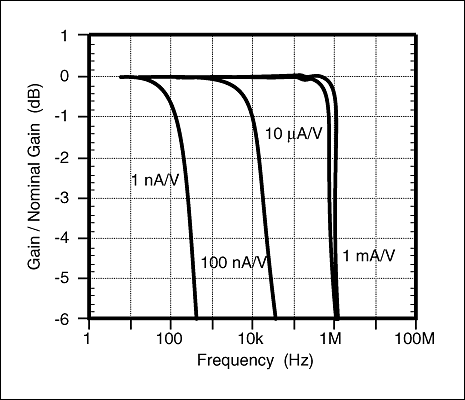
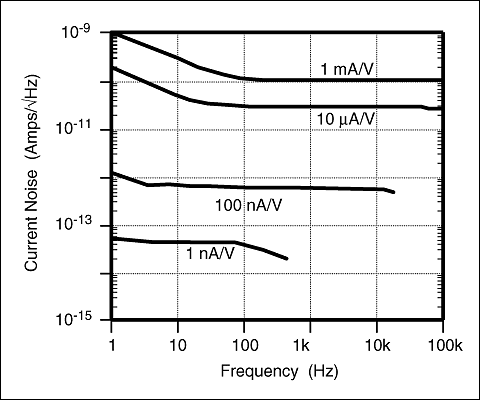
Gain can be allocated to various stages of the amplifier to optimize the instruments performance. The low noise mode places gain in the front end of the amplifier for the best noise performance. The high bandwidth mode allocates gain to the later stages of the amplifier to improve the frequency response of the front end. In the low drift mode, the input amplifier is replaced with a very low
Filters
The SR570 contains two first-order RC filters whose cutoff frequency and type can be configured from the front panel. Together, the filters can be configured as a 6 or
Input Offset and DC Bias
An input offset-current adjustment is provided to suppress any undesired DC background currents. Offset currents can be specified from ±1 pA to ±1 mA in roughly 0.1 % increments. The SR570 also has an adjustable input DC bias voltage (±5 V) that allows you to directly sink current into a virtual null (analog ground) or a selected DC bias.
Toggle and Blanking
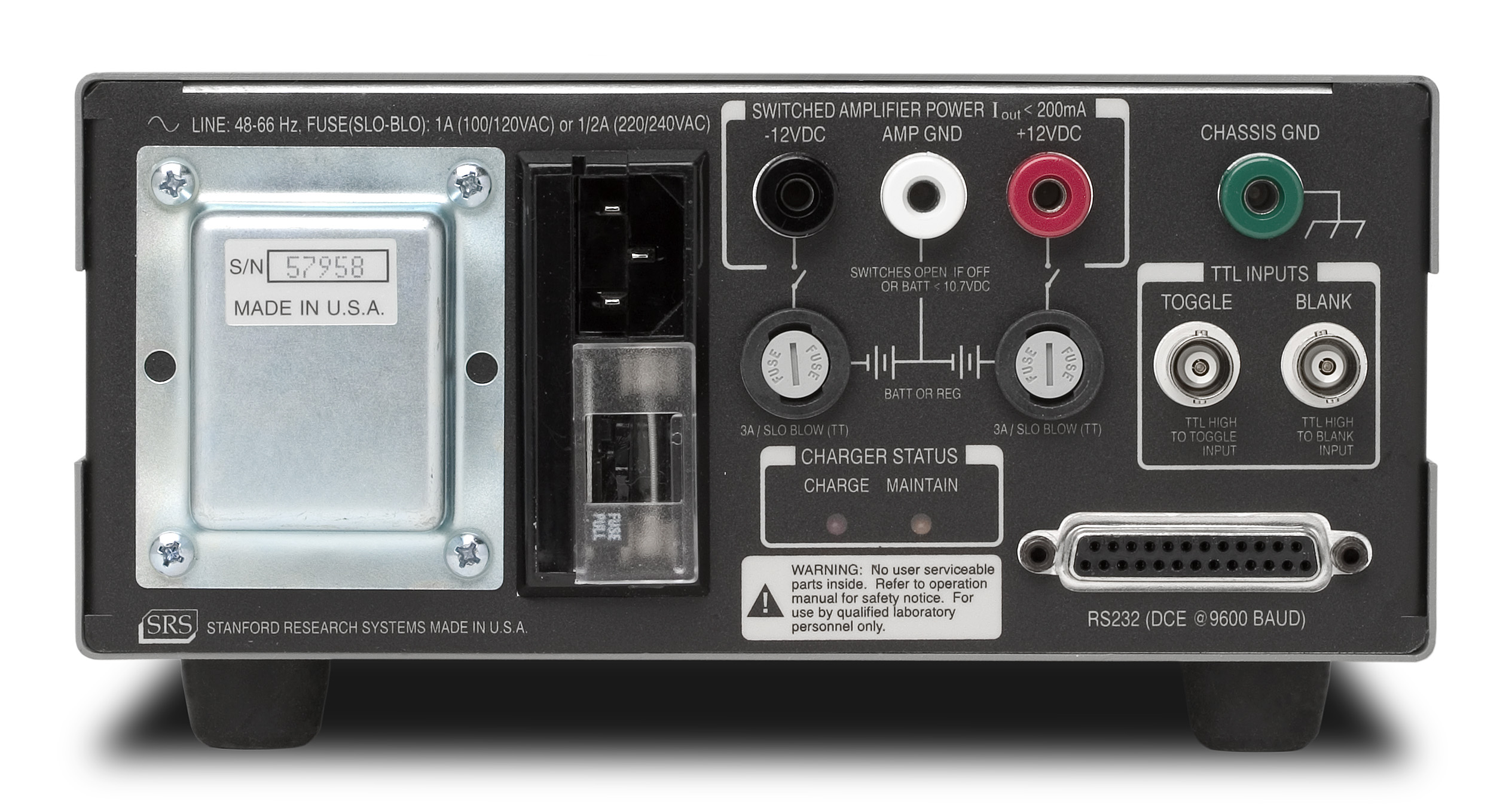
Two rear-panel, opto-isolated TTL inputs provide additional control of the SR570. A blanking input lets you quickly turn off/on the instrument's gain which is useful in preventing
Battery Operation
Three rechargeable lead-acid batteries provide up to 15 hours of
No Digital Noise
The microprocessor that runs the SR570 is "asleep" except during the brief interval it takes to change the instrument's setup. This ensures that no digital noise will contaminate low-level analog signals.
RS-232 Interface
The RS-232 interface allows listen-only communication with the SR570 at 9600 baud. All functions of the instrument (except power on) can be set via the