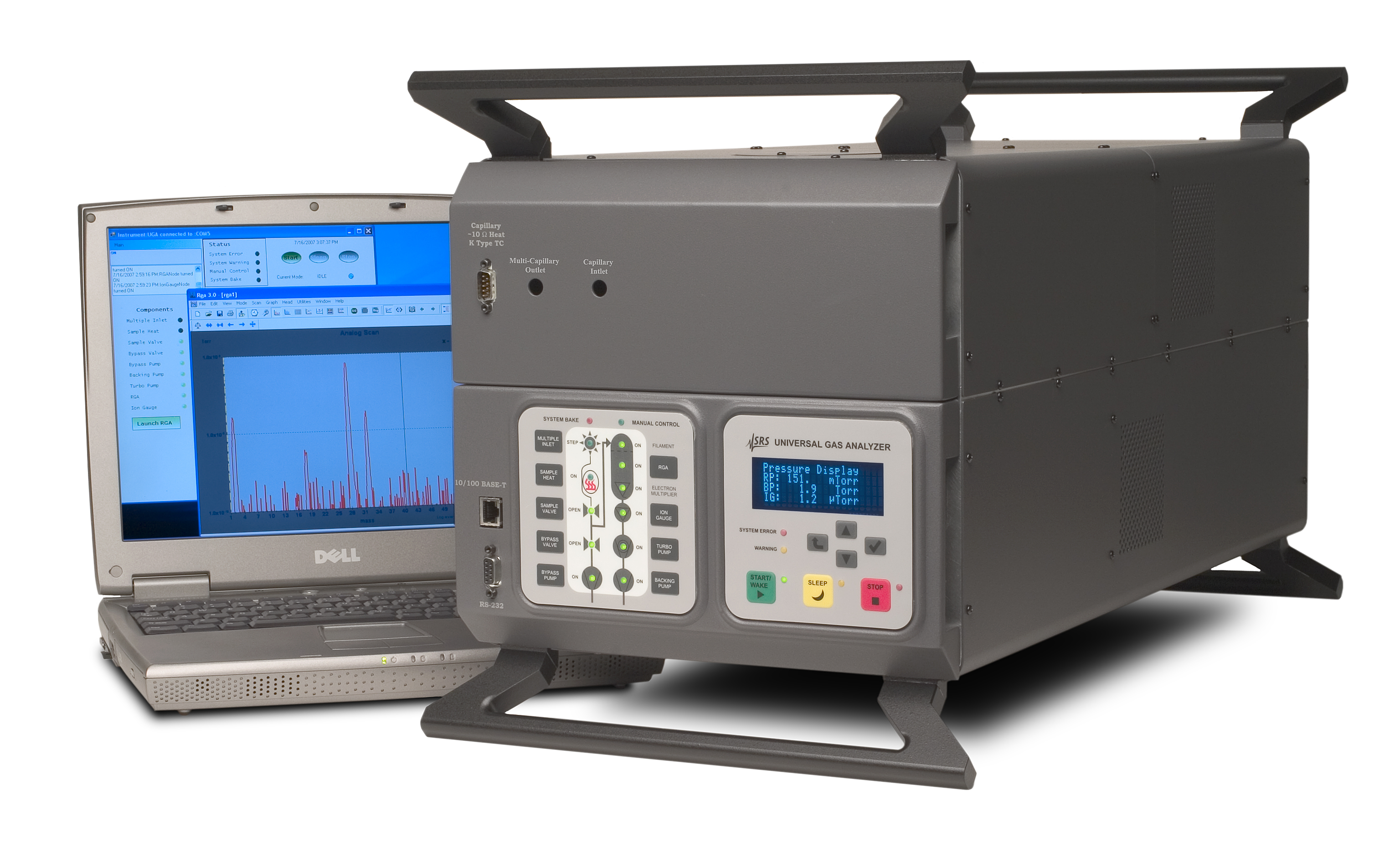
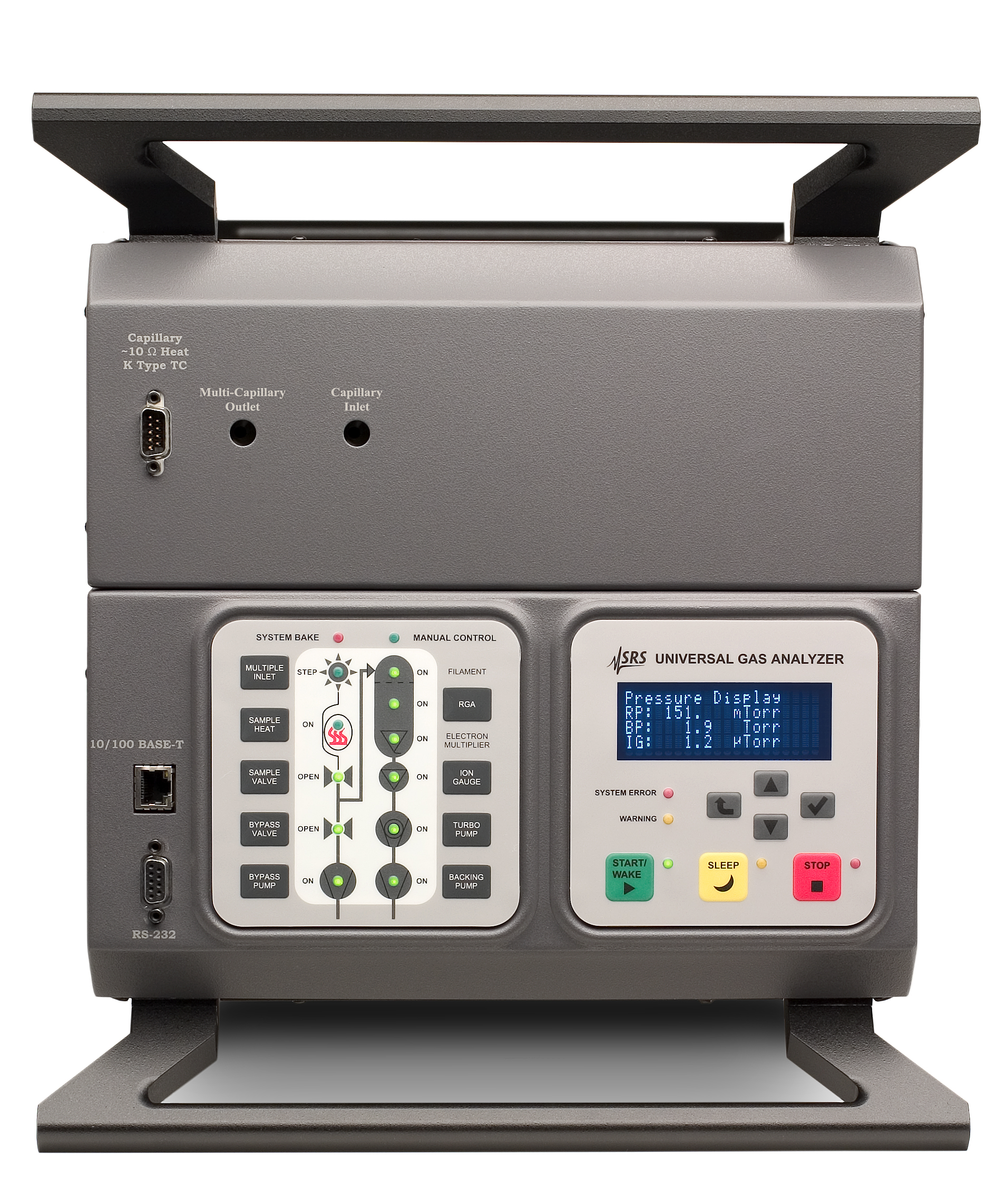
UGA series—ideal for corrosive gases
UGA-Hydrogen series (UGA w/opt. 3)—ideal for high concentration of H2
ULT series—low cost solution (starting at $32,500)
The UGA and ULT Series Universal Gas Analyzers are
UGA applications include semiconductor exhaust gas monitoring, glove box analysis, fuel cell studies, Freon detection, pollution monitoring, fermentation studies and general R&D vacuum analysis.
These analyzers are also simple to operate and maintain. The chassis design allows the instrument to be operated vertically or horizontally, and both front-panel and computer operation are supported. The ULT series is a simplified design for less demanding applications.
Principle of operation
The UGA system uses a two-stage pressure reducing inlet to sample gases at atmospheric pressure. After the pressure is reduced to around
The UGA Windows software provides a graphical user interface for complex graphing and data analysis. The software also allows remote control of the system's valves, heaters and pumps.
For gas sampling in the range of
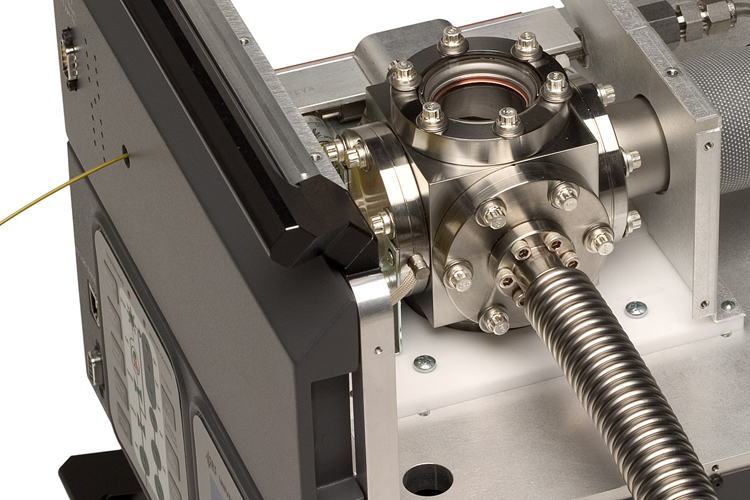
Direct access to the RGA is provided for UHV applications
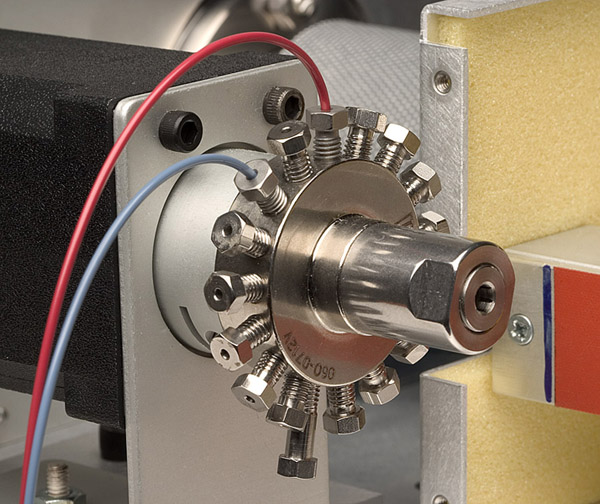
Multi-capillary inlet (UGA series only)
An optional multi-port sampling inlet consists of 16 manifold-mounted valves that can be used with a variety of capillaries.
Heated chamber (UGA series only)
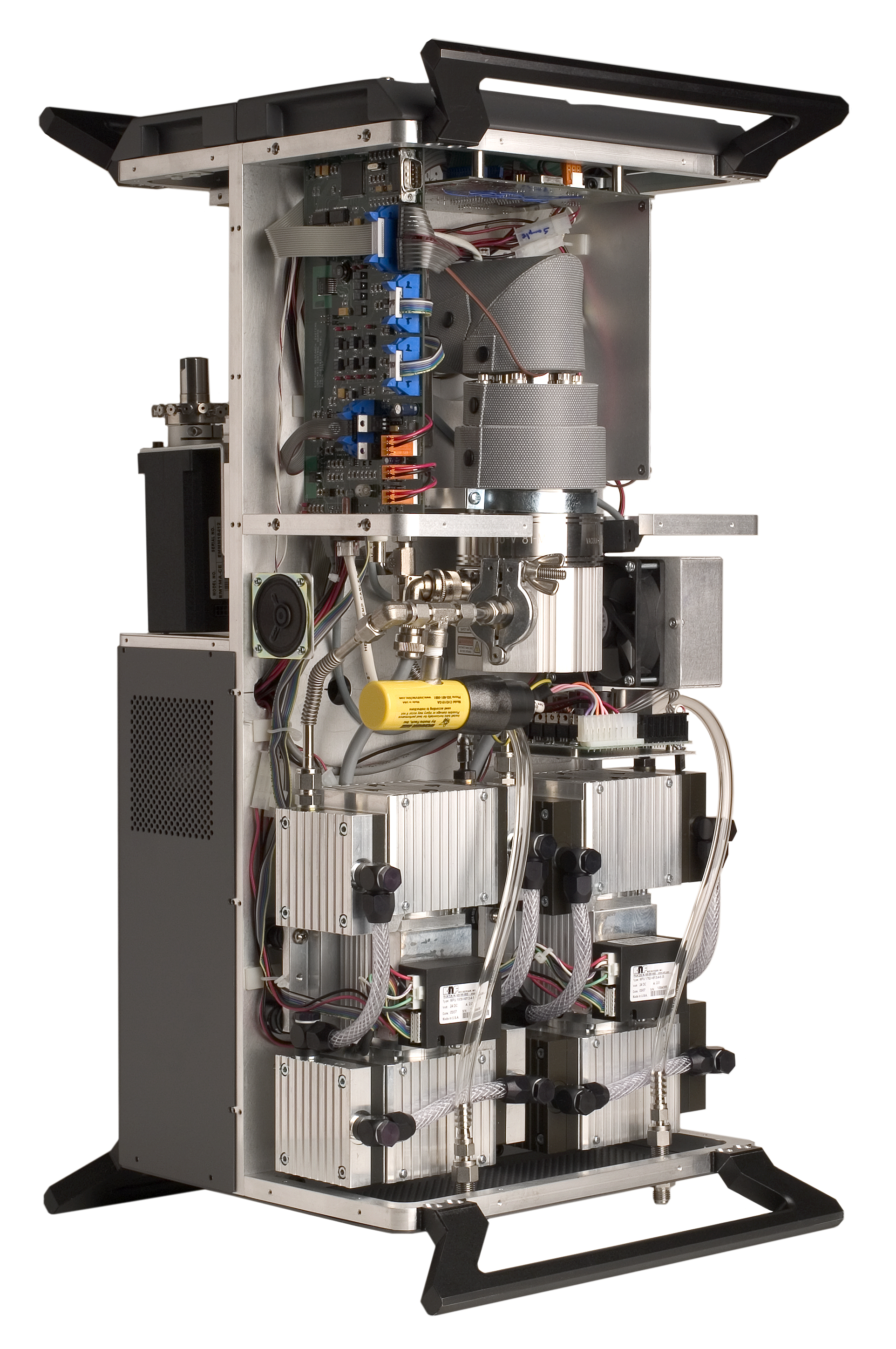
The UGA system is equipped with individual heaters for the vacuum chamber (including RGA), the turbo pump connector, and the vacuum inlet assembly. During bakeout, the system can be heated to 120 °C.
Dual-diaphragm pumps (UGA series only)
Separate diaphragm pumps are used to handle the bypass flow and backing of the turbo pump. This architecture allows corrosive gases (chlorine, fluorine, etc.) to be analyzed without damaging the RGA and turbo pump, and virtually eliminates the problem of back streaming. Measuring high concentrations of low mass gases (hydrogen, helium, etc.) is no longer a problem.
Turbo pump venting (UGA and ULT)
An optional valve and inlet to the turbo pump's exhaust is available for users who wish to vent with dry nitrogen (or other inert gases). This keeps the pump free from water and other contaminants present in air.
Using your UGA
The UGA system can be controlled from the front-panel or from a computer. A choice of manual or auto-control of all system components is provided.
Data is measured and displayed using the UGA software. The intuitive user interface allows measurements to be made quickly and easily. Data is captured and displayed in real-time, or scheduled for acquisition at a specified time.
Features include analog and histogram scan modes, pressure vs. time plots, leak detection, gas library, and
RGA parameters can also be controlled and monitored through a high-level ASCII command set. Standard
Best value
The UGA Analyzers offer the best value of any system currently available. They provide more performance, better features, and are priced well below the competition.