CG635
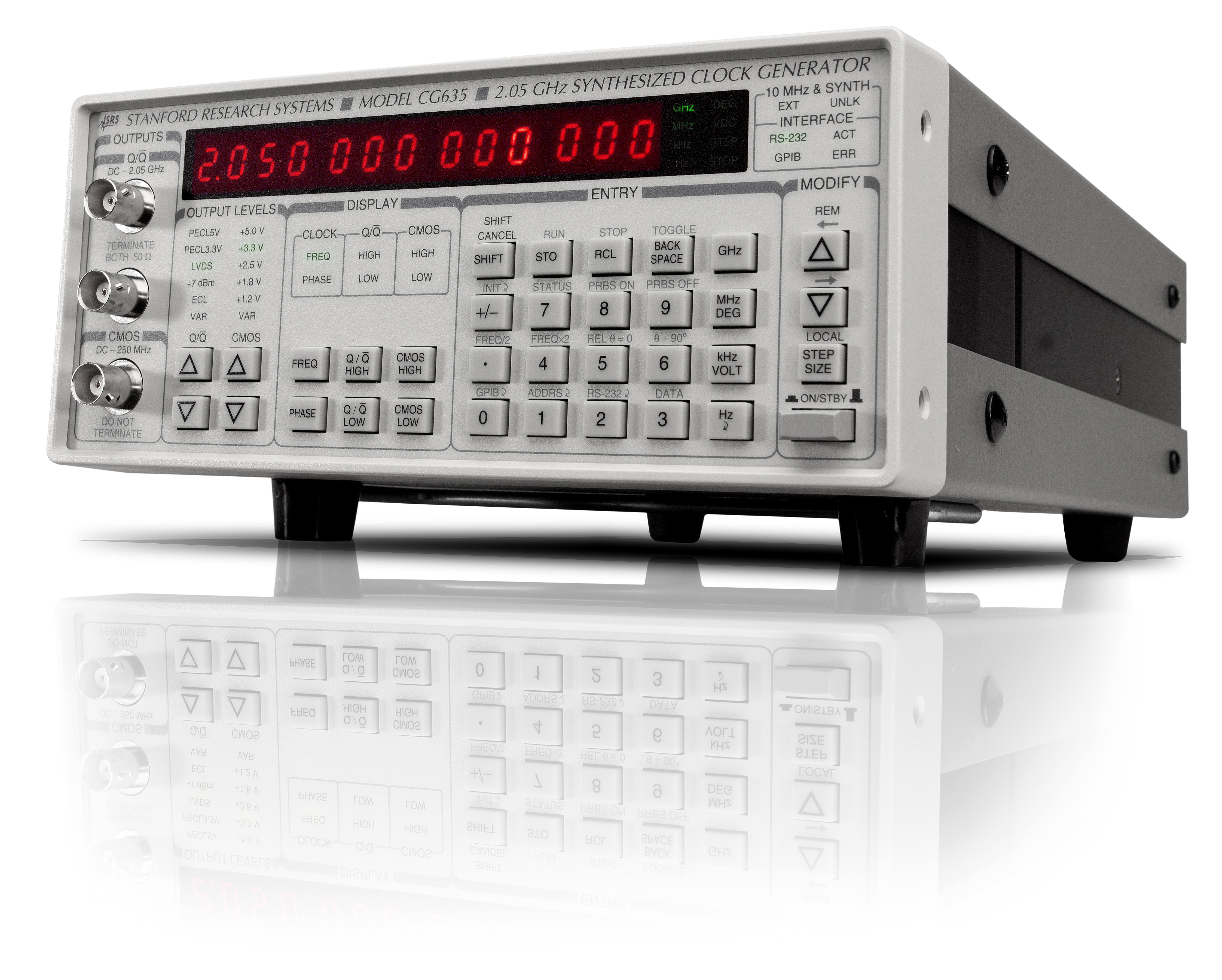
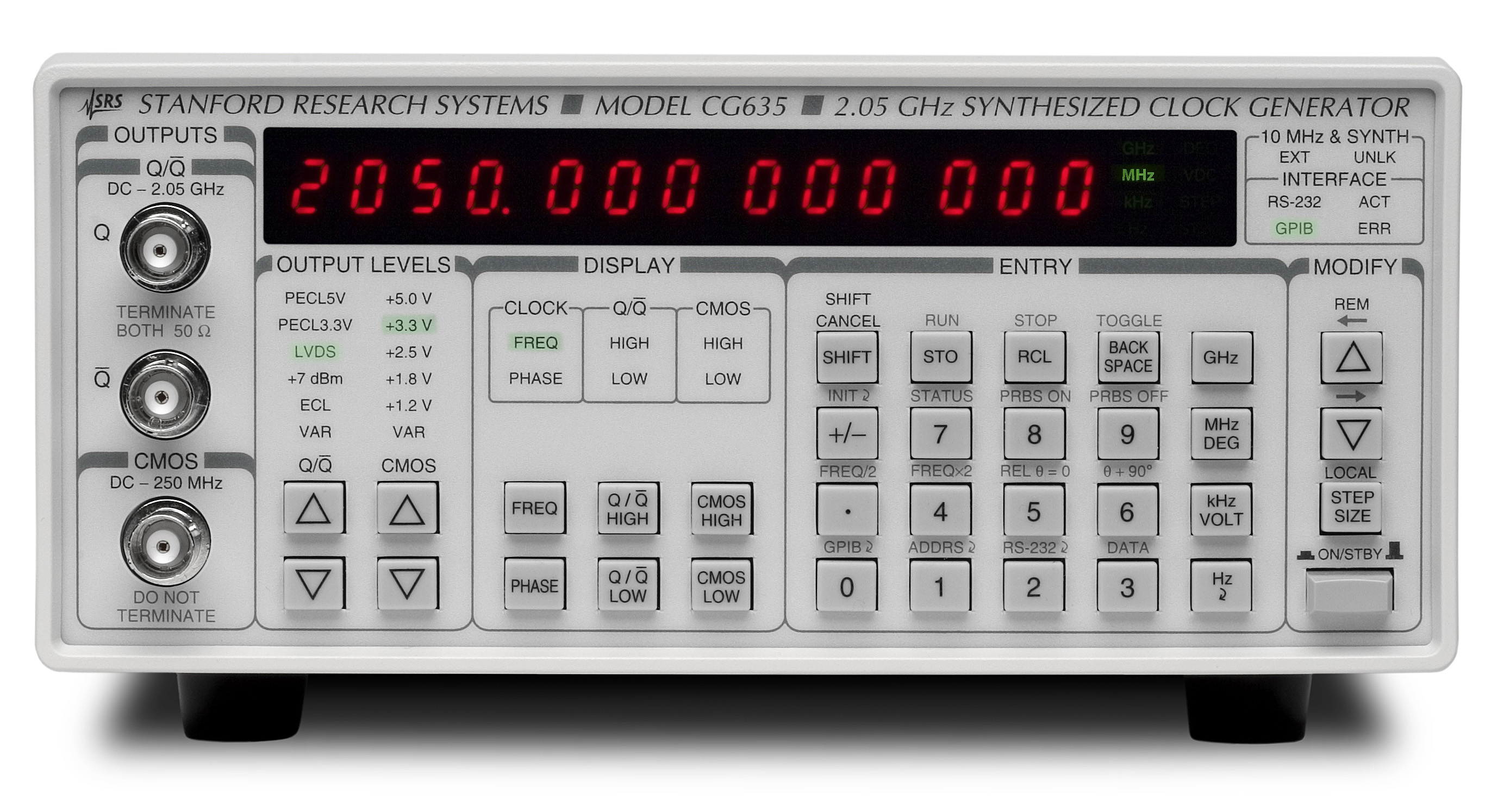
The CG635 generates extremely stable square wave clocks between 1 µHz and 2.05 GHz. The instrument's high frequency resolution, low jitter, fast transition times, and flexible output levels make it ideal for use in the development and testing of virtually any digital component, system or network.
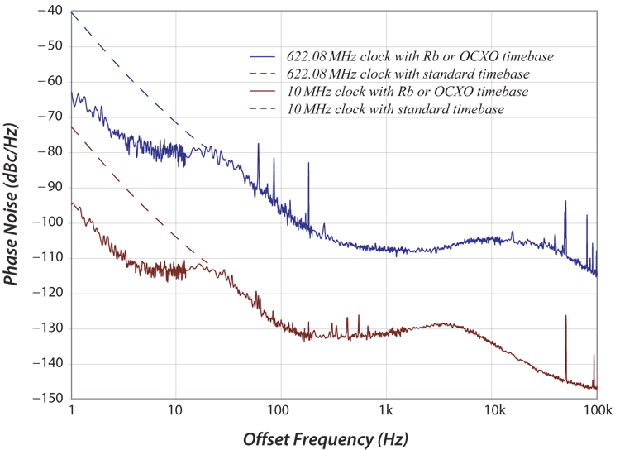
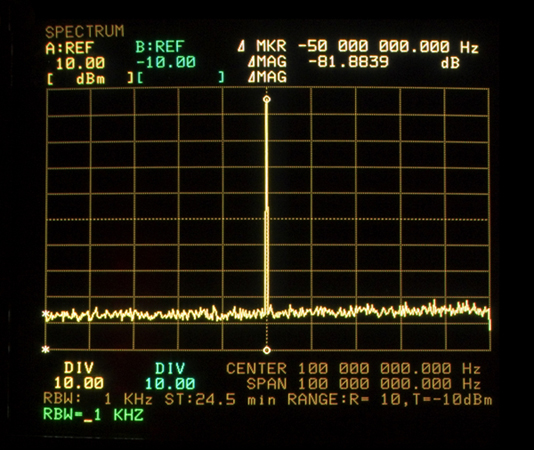
Clean clocks are critical in systems that use high-speed ADCs or DACs. Spurious clock modulation and jitter create artifacts and noise in acquired signals and in reconstructed waveforms. Clean clocks are also important in communications systems and networks. Jitter, wander, or frequency offsets can lead to high bit error rates, or to a total loss of synchronization. The CG635 can provide the clean, stable clocks required for the most critical applications.
Output Drivers
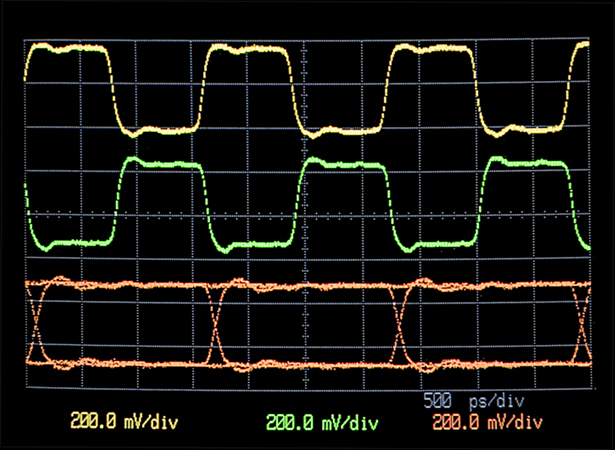
The CG635 has several clock outputs. The front-panel Q and
The front-panel CMOS output provides square waves at standard logic levels. The output may also be set to any amplitude from 0.5 V to 6.0 V. The CMOS output has transition times of less than 1 ns and operates up to 250 MHz. It has a 50 Ω source impedance and is intended to drive high impedance loads at the end of any length of 50 Ω coax cable.
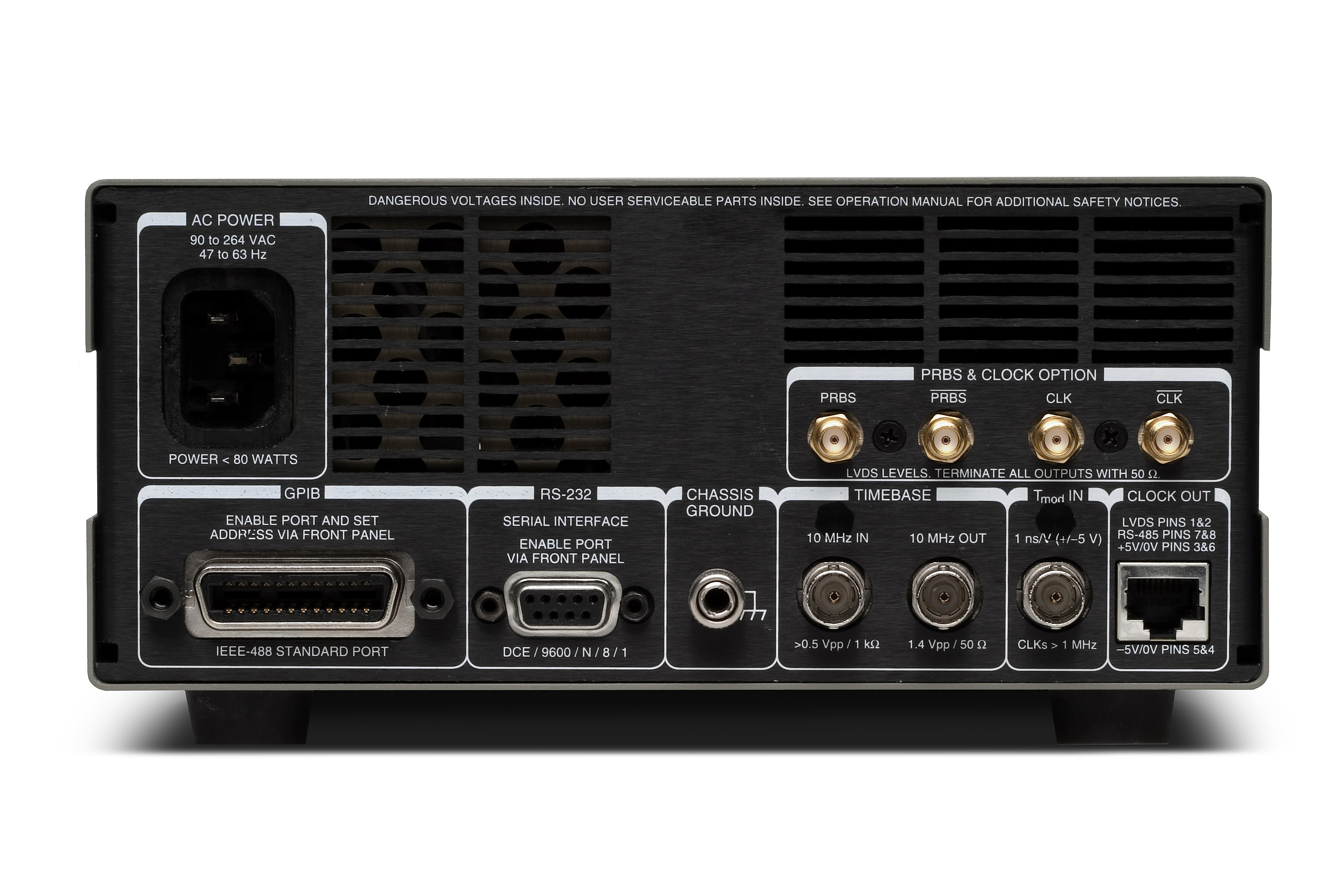
A rear-panel
Choice of Timebases
The standard crystal timebase has a stability of better than 5 ppm. The CG635's 10 MHz timebase input allows the instrument to be phase-locked to an external 10 MHz reference. The 10 MHz output may be used to lock two CG635s together.
There are two optional timebases.
Phase and Time Modulation
The clock phase can be adjusted with high precision. The phase resolution is one degree for frequencies above 200 MHz, and increases by a factor of ten for each decade below 200 MHz, with a maximum resolution of
The timing of clock edges can be modulated over ±5 ns via a
For Every Application
With its exceptionally low phase noise and high frequency resolution, the CG635 replaces RF signal generators in many applications.
The CG635 can provide a wide range of clean, precise clocks for the most critical timing requirements. The instrument is an essential tool for demonstrating a system's performance with a nearly ideal clock, and for understanding a system's susceptibility to a compromised clock. The CG635 has the frequency range, precision, stability, and jitter-free performance needed to fulfill all your clock requirements.